Most Asked Questions About Human Composting


Human Composting 101
|
November 24, 2022
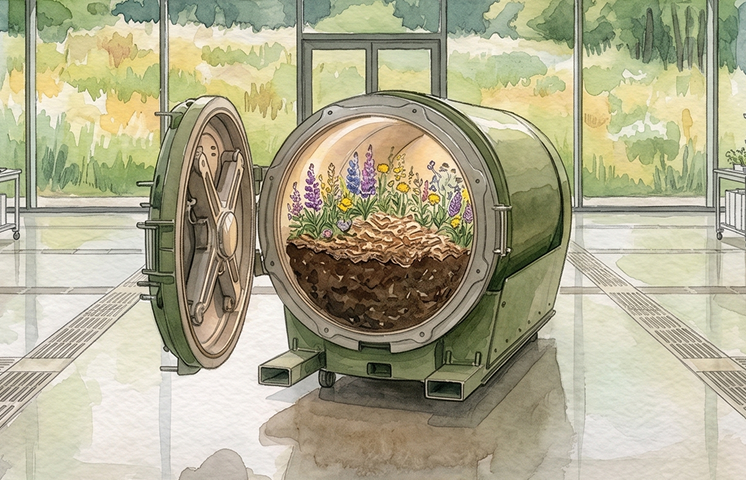
Human composting, also known as natural organic reduction or soil transformation, is an environmentally-friendly alternative to burial and cremation. The process uses the principles of nature to gently transform a body into nutrient-rich soil.
Interest and awareness around green funerals are growing rapidly, however human composting is still new to many. This article answers some of the most frequently asked questions about the human composting process. These cover topics such as legality, availability and environmental impact.
The human composting process takes approximately 30 to 45 days.
The exact duration of the body composting process depends on the size of the body. The larger the body, the longer the process will take, much like cremation.
The cost of human composting varies, ranging from just under $5,000 to just over $7,000.
Factors that influence the cost of human composting include location and choice of provider. Cost will also vary based on what is included in the package. As with all funeral services, it is important to check what is and isn’t included before comparing prices. The Earth package includes everything needed and pricing is simple and transparent.
In 2019, Washington became the first state to legalize human composting, with the law taking effect in May 2020. Since then, fourteen states have legalized the process: Arizona, California, Maryland, Nevada, New Jersey, Oregon, Washington, Colorado, Georgia, Minnesota, New York, Vermont, Delaware, and Maine.
Bills are in progress in New Mexico, Utah, Illinois, Massachusetts, Ohio, Texas, Connecticut, Indiana, Missouri, New Hampshire, Rhode Island, and Hawaii.
In states where the process is not yet legal, human composting may still be available to residents. Families can often arrange for transportation to a licensed facility in a nearby state where the process is permitted, and have the resulting soil returned home.
View our tracker for full details of the legislation in each state and where human composting services are available.
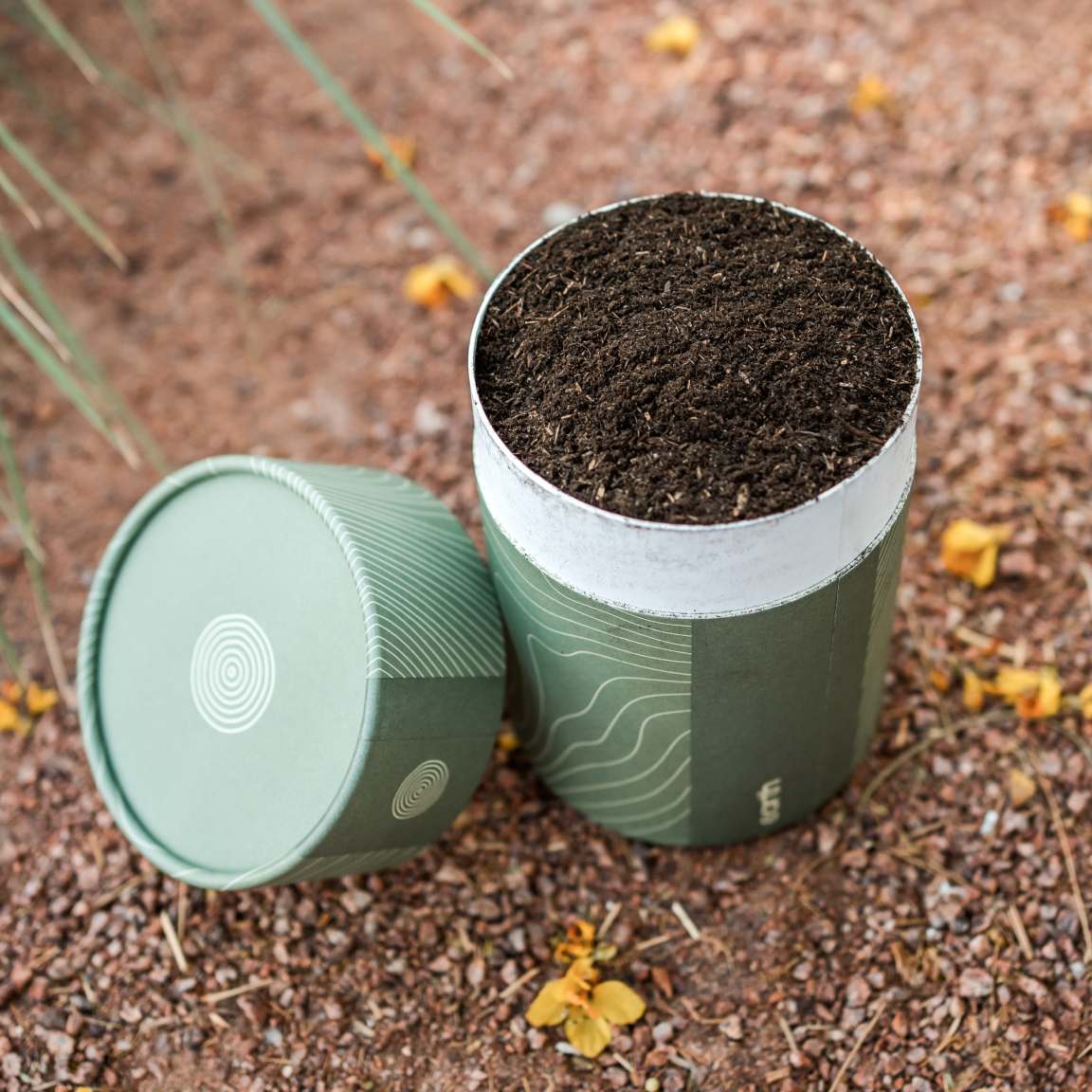
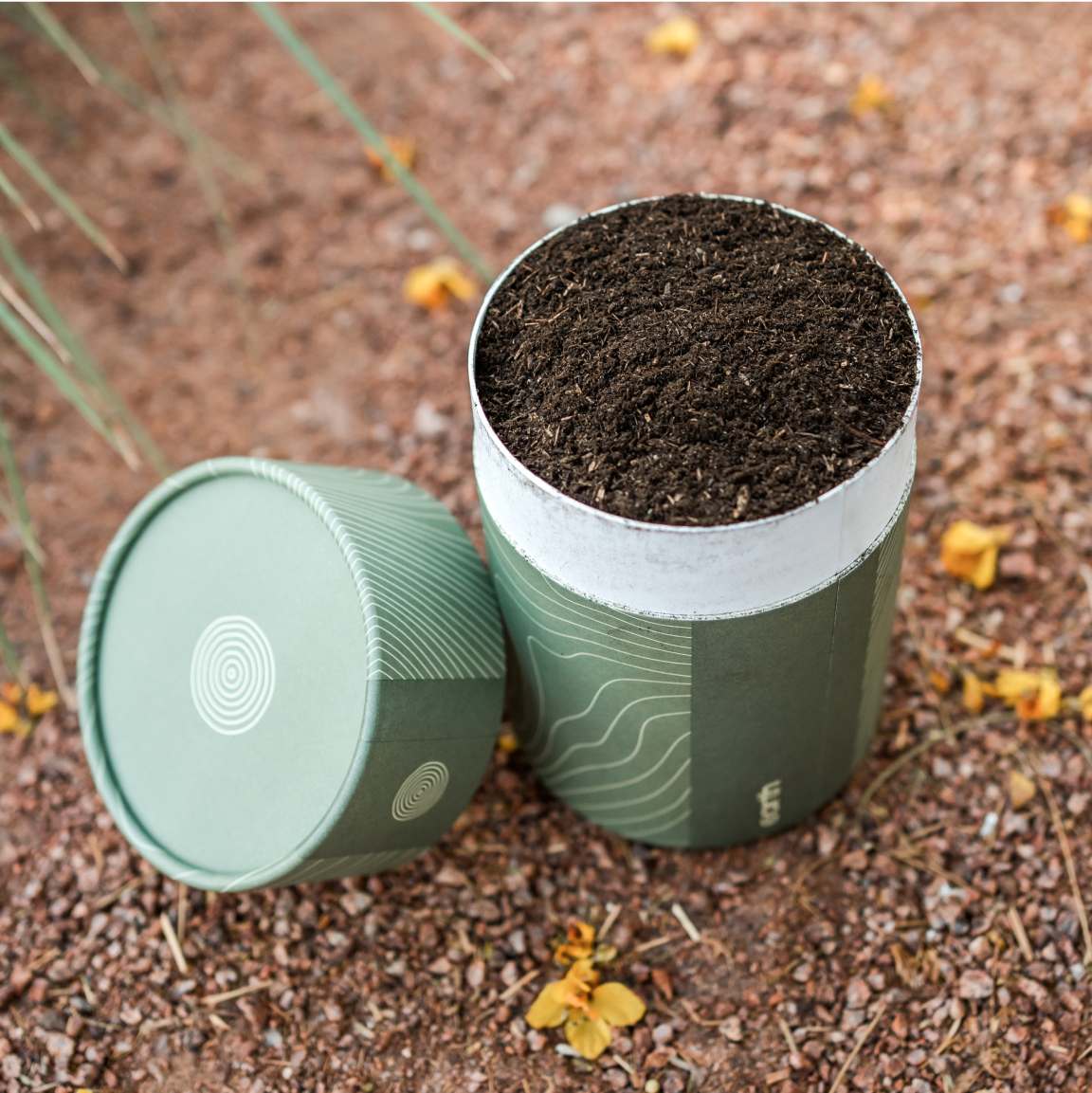
The human composting process produces approximately one cubic yard of soil.
This soil is healthy and rich in nutrients. There is enough soil for both a personal memorial and a meaningful contribution to conservation projects.
{{CTA-webinar-2}}
Soil from human composting can be used for a variety of purposes, including memorialization and land conservation.
Healthy soil is very important for the environment. As a result, the nutrient-rich soil produced by soil transformation can be put to valuable use towards conservation efforts.
At Earth, our families choose how much soil they would like returned - to scatter or plant. The remainder is sent to our conservation sites where it is used for land restoration projects. These include reforestation, erosion control and restoring soil health.
Many families opt to use a portion of the soil to nurture flowers or to scatter somewhere meaningful. For ideas on how to use human composting soil to honor a loved one, read our soil use suggestions.
{{CTA}}
Human composting avoids the negative environmental impacts of traditional funeral practices, and produces healthy soil which can have an actively positive environmental impact.
Cremation is a fossil fuel driven process with high carbon emissions and traditional burial is a resource-intensive process that involves the consumption of urban land at an unsustainable rate. While one pollutes the air, the other pollutes the earth.
Human composting is a natural process that produces no net CO2, and Earth’s service is powered by renewable electric energy sources. As well as avoiding the negative outputs of traditional options, the process produces nutrient-rich soil that can be used in conservation projects.
Read more about the positive environmental impact of human composting.
Yes, human composting is referred to by a number of names, some more common than others. The process is also known as soil transformation, terramation and recomposition. In legislation, human composting is referred to as natural organic reduction.
You can find answers to dozens more questions about human composting and how Earth operates on our FAQ page.
Other resources you may find useful include our statistics page and our simple human composting explainer.

Human Composting 101
Human composting is the gentle, natural process of turning a person into soil. This green burial option takes place in a controlled environment and allows individuals to return to nature upon death, and become part of a regenerating and natural ecosystem. It is an eco-friendly alternative to burial and cremation.
6/3/2026
8 min read
© 2026 Earth Funeral